
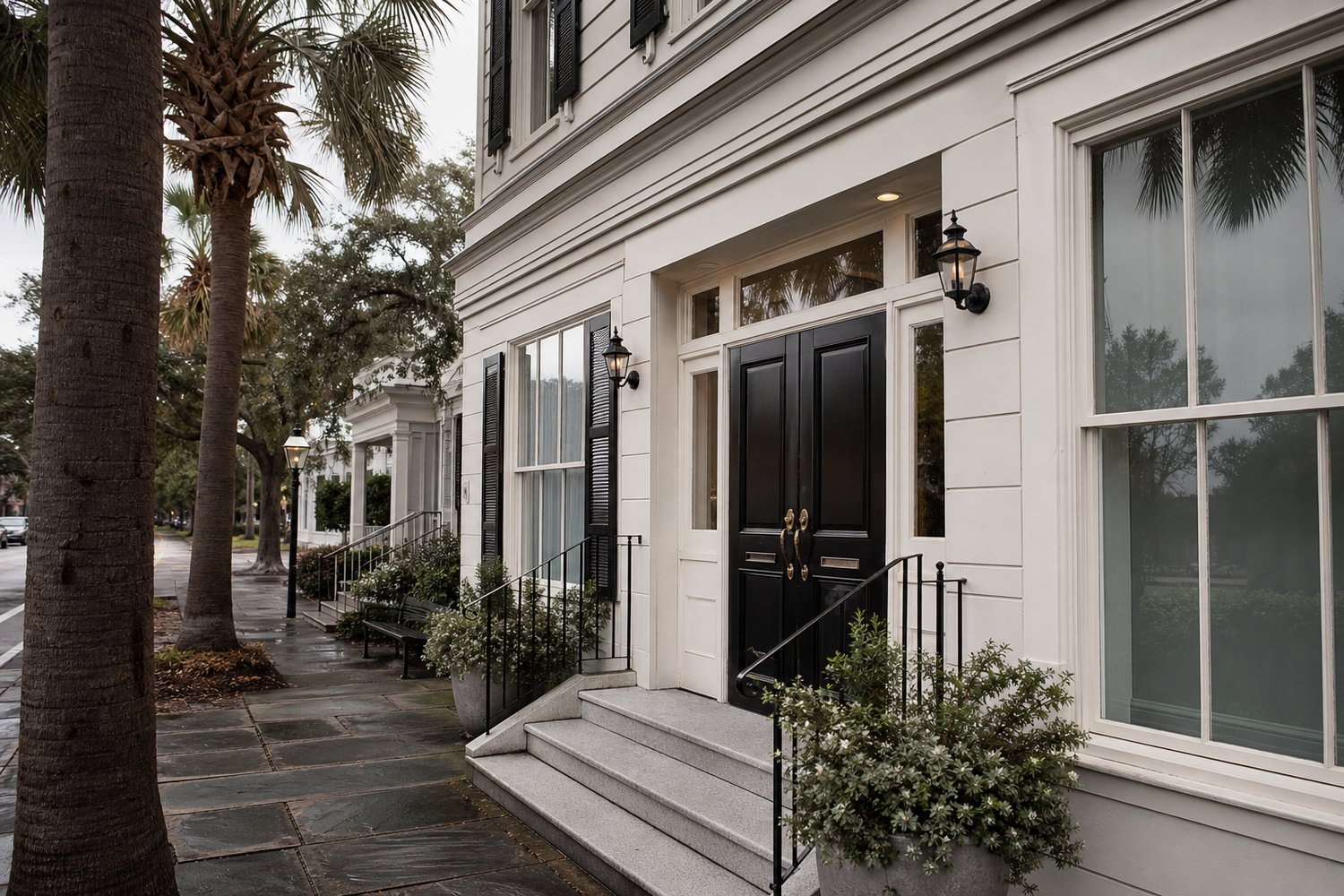
How much cash do you need to buy a house in Charleston Region?
Cash to buy a house in Charleston Region is your down payment plus closing charges, prepaid items, and escrow deposits, minus the earnest money you've already paid and any credits you negotiate. Inspections come out of your pocket earlier, during due diligence. The exact figure depends on your loan, the county, the insurance quote, and your closing date, and the final number appears on your lender's Closing Disclosure.
Key Takeaways
- Mount Pleasant's median sale price for all home types sold August to October 2026 was $889,381, so the price range you shop in drives every cash number below it.
- The down payment is one bucket among several: lender charges, attorney and title services, prepaid interest, insurance and tax escrow deposits, and inspections all add to it.
- South Carolina's deed-recording fee is $1.85 for each $500 of realty value ($1.30 state, $0.55 county), and your contract decides who pays it.
- Inspections are paid during the due diligence period, before closing, and they are separate from your down payment.
- Only your lender's Closing Disclosure gives the cash-to-close figure required for your purchase; anything before that is a planning estimate.
What goes into cash to close on a house in Charleston Region?
Cash to close is your down payment plus transaction charges, prepaid items, and escrow deposits, minus earnest money already paid and any permitted seller or lender credits. That's the formula. The hard part is that nearly every line in it changes from one home to the next.
I walk my clients through these buckets before we ever write an offer, because a buyer who only budgets for the down payment gets surprised at the closing table. Here's how the pieces break down.
| Cash bucket | What it covers | What sets the amount |
|---|---|---|
| Down payment | Your share of the purchase price | Loan program and the price you negotiate |
| Earnest money | Deposit paid after you go under contract; it reduces the cash you bring at closing | Your contract |
| Inspections | General home inspection plus specialized ones such as termite, sewer, septic, well, HVAC, roof, structural, or flood | The property and what you choose during due diligence |
| Lender charges | Fees for originating and processing your loan | Your loan and lender |
| Attorney and title services | The attorney closing and title-related work | The property and the contract |
| Deed-recording fee | State and county fee when the deed is recorded | Realty value; the contract allocates who pays |
| Prepaid mortgage interest | Interest from closing day to the end of that month | Your closing date |
| Prepaid insurance and escrow deposits | Homeowners policy payment and the lender's starting deposit for taxes and insurance | Tax bill, insurance premium, and closing date |
| HOA capital contribution | One-time amount some HOA communities collect at transfer | The HOA documents and your contract |
| Credits | Seller or lender credits that reduce your cash | Negotiation and your lender's limits |
Is the down payment the only cash you need?
No. The Consumer Financial Protection Bureau describes cash to close as covering lender charges, title and settlement services, recording fees, prepaid taxes, homeowners insurance, prepaid interest, and the initial escrow deposit, on top of the down payment. In South Carolina, a real estate attorney handles the closing, so attorney charges belong on your list too.
Does earnest money count toward what you owe?
Yes. Earnest money you've already paid is subtracted when your cash to close is calculated, so it isn't an extra cost. Your contract spells out when that deposit is refundable and when a termination fee could apply, so read those terms before you sign.
When do you pay for inspections?
You pay for inspections during the due diligence period, well before closing. They aren't part of your down payment. A general inspection is common. Depending on the home, you may add termite, sewer, septic, well, roof, HVAC, or flood-related inspections. If you're looking at the water, my post on Charleston Region waterfront home checks covers what else to line up.
What about the deed-recording fee?
The South Carolina Department of Revenue says the deed-recording fee is $1.85 for each $500, or fractional part of $500, of realty value. It's made up of a $1.30 state portion and a $0.55 county portion. Plenty of people call it deed stamps, but the official name is the deed-recording fee.
The contract determines which party pays it unless another rule or agreement controls. I won't run that rate against a sample price here. Your attorney's closing statement shows the actual figure for your purchase.
Why does your cash number change from one home to the next?
Your cash number changes because taxes, insurance, closing date, and price all change from property to property. A single Charleston-wide estimate doesn't exist. What a buyer needs is a number built around one specific home.
Does the county and the home matter?
Yes. Charleston Region purchases can fall in Charleston County, Berkeley County, or Dorchester County. Property-tax bills, insurance premiums, and escrow deposits can differ a lot between counties and between two homes on the same street.
How does insurance move the number?
Insurance is where Lowcountry buyers get the biggest surprises. Flood zones and elevation certificates affect insurance costs and what a waterfront home is truly worth. Wind and hail coverage also differs east versus west of Highway 17. Since your first year of homeowners insurance and your escrow deposit both come from that premium, an expensive quote raises your cash to close. Get a quote on the specific property, not an average.
How does the closing date change what you bring?
Your lender collects mortgage interest from closing day through the end of the month, so the prepaid interest changes with your closing date. The starting escrow deposits depend on the closing date too, along with the tax schedule, your insurance policy, and what the seller has already paid. Ask your lender to show you how a different closing date shifts your figures.
How does price range change the cash you need?
Price sets the scale. Recent local market data shows a median sale price of $889,381 for all home types sold in Mount Pleasant from August to October 2026, with 440 homes sold. That's an area-level number, and an individual home's value depends on condition, street, build year, and timing. Here's how my other core areas compare for the same window:
| Area | Median Sale Price | Homes Sold |
|---|---|---|
| Mount Pleasant | $889,381 | 440 |
| Daniel Island | $1,799,139 | 98 |
| Downtown Charleston | $1,571,248 | 22 |
| West Ashley | $507,757 | 219 |
| Isle of Palms | $1,813,738 | 60 |
Negotiation can matter too. In Mount Pleasant, homes sold August to October 2026 averaged 97.5% of list price, and 70% sold below list. That doesn't promise you a discount or a seller credit, but it shows why credits are worth discussing on a specific home. For a closer look at ownership costs beyond closing, see my breakdown of West Ashley homeownership costs.
On the supply side, the Charleston Trident Association of REALTORS® November 2026 market report lists 5,582 homes in inventory across the region. That gives you choices, and your choices decide your cash needs.
How do you build your own cash estimate before making an offer?
Build it in layers: talk to a lender first, price the specific home's taxes and insurance, add inspection money, then subtract earnest money and credits. Treat anything before your Closing Disclosure as a planning range, not the amount required for your purchase.
- Talk to a lender before you tour. You want to know what you're approved for and what the cash side looks like before you fall for a house.
- Pick the county and the property. Taxes and insurance drive your escrow and prepaid items, so use the real home, not an average.
- Ask for a Loan Estimate on the home you're pursuing. It's the lender's early itemized look at your loan terms and charges.
- Set aside inspection money. Plan for a general inspection and any specialized ones the property calls for.
- Subtract earnest money and negotiated credits. Keep credits realistic; your lender limits what's allowed.
- Reconcile with the Closing Disclosure. Your lender's Closing Disclosure shows the required cash to close, generally before closing.
What should you keep in reserve after closing?
Keep money in reserve beyond the closing table. Repairs, insurance deductibles, and move-in costs don't wait. Some loans and property types call for reserves, so ask your lender what applies to yours.
Here's something I tell buyers honestly and early. After we tour homes in their original budget, they usually raise it, because they see what the lifestyle actually costs and decide it's worth it. When your price goes up, your cash needs go up with it, so it helps to run the numbers before you fall in love. If you're relocating, my post on the Charleston SC relocation process covers the timing side.
After 28 years and 600+ families, I've seen that the buyers who feel calm at closing are the ones who got a purchase-specific number early. That's what a consultation gets you.
Want to see how other buyers describe working with me? Read my reviews on Google, Zillow, and Realtor.com.
FAQ
How much money do I need upfront to buy a house in Charleston, SC?
You need your down payment plus closing charges, prepaid items, escrow deposits, and inspection costs, minus earnest money and credits. There's no single Charleston number because price, county, loan, insurance, and closing date all change it. I'll help you build a figure for a specific home.
Is the down payment the only cash I need at closing?
No. At closing you also pay for lender charges, attorney and title services, the deed-recording fee if your contract assigns it to you, prepaid interest, prepaid insurance, and initial escrow deposits. Your Closing Disclosure itemizes each one.
Do I need cash for a home inspection before closing?
Yes. Inspections are normally arranged and paid during the due diligence period, not rolled into your down payment. The scope depends on the home. It might include a general inspection plus termite, sewer, septic, well, roof, HVAC, or flood-related work.
Can seller credits reduce the cash I need to close in South Carolina?
They can. A seller credit is negotiated in the contract and applied against your closing charges, and your lender limits what's permitted. Whether a credit is realistic depends on the home, the price, and the seller's situation, so discuss it with me before you offer.
Does earnest money count toward my down payment or closing costs?
Earnest money you've paid is credited toward what you owe, so it reduces the cash you bring to closing. Your contract controls when it's refundable. Confirm the credit on your Closing Disclosure.
The down payment is only one line in your cash to close. Once you add the closing charges, prepaid items, escrow deposits, and inspections, the picture changes with every home. If you want a real number for a house in Charleston Region, contact me to schedule an appointment and we'll walk through your numbers together. You can also download the buyers guide to start planning.
Equal Housing Opportunity. KIMBERLY RITTER is a REALTOR® with Carolina One Real Estate, licensed in South Carolina (SC #47317), and regulated by the South Carolina Association of Realtors. This article is general information, not legal, tax, or financial advice. Confirm your own numbers with your real estate attorney, tax advisor, or lender.