
Why Are Charleston Waterfront Homes Difficult to Replace?
What makes Charleston waterfront homes difficult to replace?
Scarcity is only part of what makes Charleston waterfront homes difficult to replace. The shoreline is fixed, wetlands and flood rules shrink what you can build on a lot, and a dock or seawall may not be rebuildable the way it stands today. Scarcity supports value, but it doesn't erase the insurance, maintenance, and access tradeoffs that come with the water.
Key Takeaways
- Mount Pleasant homes of all types sold August–October 2026 had a median sale price of $889,381, about 1.2% below the $900,000 median in the same window a year earlier, so waterfront scarcity doesn't lift every home in town.
- Among Mount Pleasant homes of all types sold August–October 2026, 35% went under contract within two weeks of listing, and months of supply sat at 3.8.
- Charleston County materials say that two of three wetland indicators (hydric soils, hydrology, and hydrophytic vegetation) can trigger a professional wetland delineation, so a lot's gross acreage can overstate what's buildable.
- The house and the waterfront amenities (dock, seawall, bulkhead, boat lift) are separate replacement questions, and the amenities may be restricted, engineered, or permitted on their own track.
- Closeness to water doesn't set your flood insurance requirement; the parcel's mapped flood zone and your lender's requirements do.
Why is waterfront supply so limited in Mount Pleasant?
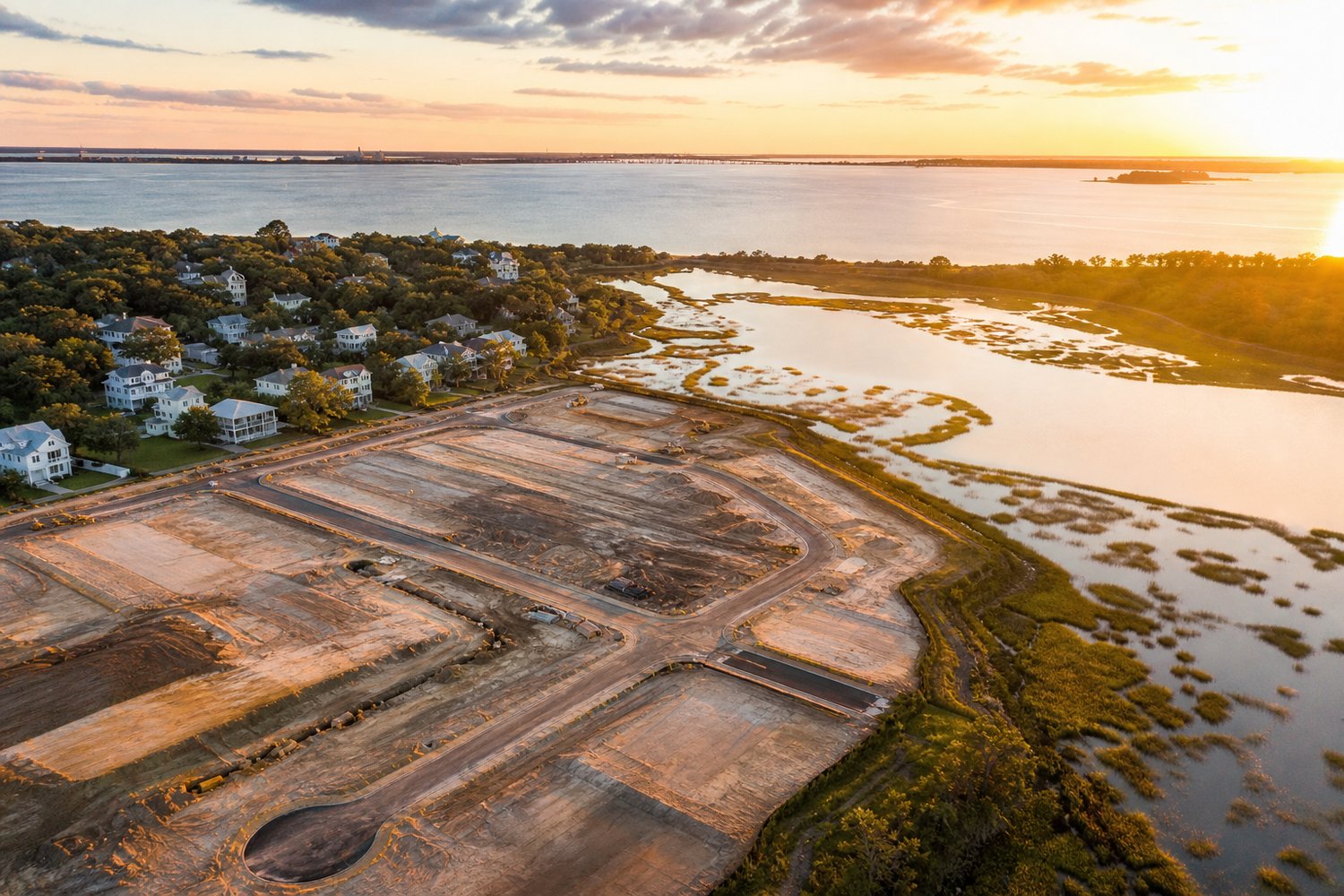
Because the shoreline is a fixed resource, and not every stretch of it can be built on, reached by boat, or permitted for a dock. I tell my clients plainly: there's only so much waterfront, and it doesn't get made again.
Here's the part most online searches get wrong. Nobody publishes a clean count of homes with deep-water frontage, dock rights, or marsh frontage. So be careful with any tidy waterfront inventory number you see. What I can give you is the broader Mount Pleasant picture, which tells you how the whole market is behaving around the waterfront segment.
| Area | Median Sale Price | Homes Sold |
|---|---|---|
| Mount Pleasant | $889,381 | 440 |
| Isle of Palms | $1,813,738 | 60 |
These are area-level medians for all home types, not waterfront-only figures. Recent local market data also shows that Mount Pleasant homes of all types sold August–October 2026 closed at an average of 97.5% of list price. Nine percent sold above list and 70% sold below. Among homes for sale now in Mount Pleasant, there are 597 active listings, with 179 new listings in the last 30 days.
What does that tell you? Waterfront homes don't sit outside the market. A waterfront home still has to price correctly against its own true comparables. Scarcity gives you leverage only when the property's water access, flood position, and condition are strong.
One more thing I see often. Buyers usually start with a budget, tour a few homes at that number, then raise it once they see what the waterfront lifestyle really takes. That's a fair decision, as long as you make it with the full ownership picture in front of you.
What limits what you can build or rebuild on a waterfront lot?
Wetlands, flood rules, shoreline permissions, and access rights can all shrink the usable site or block a like-for-like rebuild. Two lots with the same view can differ a lot once you look at the parcel itself.
How do wetlands affect a waterfront parcel?
They can reduce how much of the lot is legally or practically buildable. Charleston County meeting materials describe a screening approach where the presence of two of three indicators, hydric soils, hydrology, and hydrophytic vegetation, can trigger the need for a professional wetland delineation (Charleston County Resiliency and Sustainability Advisory Committee materials). Gross acreage can look generous on paper while marsh, buffers, setbacks, and drainage features take up much of it.
The Town of Mount Pleasant also has local isolated-wetlands protections, described in a 2026 town ordinance presentation. Exemptions, buffers, and permitting depend on the ordinance in force for your parcel and the work you plan, so confirm it before you assume an addition or a rebuild elsewhere on the lot will work. On the barrier islands, the Coastal Tidelands and Wetlands Act adds another layer, especially for docks and building.
Can you replace the dock, seawall, or bulkhead along with the house?
Not automatically. Rebuilding the residence may be possible while replacing a dock, bulkhead, seawall, boat lift, or shoreline stabilization is separately restricted, engineered, permitted, or not feasible at all. Those pieces are often central to a home's appeal, and they don't transfer to a replacement structure by default.
That's why I look at the house and the water access as two different assets. If you're weighing a dock specifically, my guide to waterfront homes with docks goes deeper.
Do access rights matter as much as the water view?
Yes, sometimes more. A home reached by a private road, shared drive, neighborhood dock, or easement comes with recorded access rights and maintenance obligations. Bridge or culvert limits and emergency-access conditions matter too. A beautiful site can carry weaker practical value if access is shared, narrow, flood-prone, or hard for construction equipment to reach.
Does scarcity cancel out insurance and maintenance tradeoffs?
No. Scarcity can support a premium, but flood insurance, wind coverage, and upkeep are recurring costs that offset part of it. Those costs vary a lot from one waterfront home to the next, even on the same street.
How do flood maps and insurance work for waterfront homes?
FEMA Flood Insurance Rate Maps are used by mortgage lenders to decide whether flood insurance is required and by local governments to run floodplain regulations, as the City of Charleston's floodplain mapping page explains. Charleston County notes that federally subsidized flood insurance through the National Flood Insurance Program is available for most properties in the county and its municipalities, including Mount Pleasant, and that flood-zone status and development requirements must be checked for the specific parcel (Charleston County Building Inspection Services).
Elevation certificates matter here. They affect insurance costs and what a waterfront home is truly worth. Wind and hail coverage also differs east versus west of Highway 17. I break both down in my posts on how flood zones affect home value and insurance and on comparing flood and wind insurance.
Is flooding only a hurricane problem?
No. The National Weather Service has issued coastal-flood advisories for the Mount Pleasant area involving shorelines and tidal waterways. Tidal flooding, drainage limits, and wind-driven rain can affect access and upkeep even when a house never takes direct storm damage.
Is all waterfront the same?
No, and this is where buyers get surprised. A property may front open river water, a tidal creek, salt marsh, or a navigable channel. Each has its own tradeoffs.
| Frontage Type | What to Check Before Pricing It |
|---|---|
| Open river or harbor water | Boat access, erosion exposure, wind and wave exposure, shoreline structure condition |
| Navigable tidal creek | Tidal depth for your boat, dock feasibility, channel access at low tide |
| Salt marsh frontage | View protection, wetland limits on building, whether a dock is realistic |
| Marsh edge without usable boat access | Whether the premium is for the view only, and what the comparable sales actually reflect |
Maintenance follows the water. Corrosion, moisture intrusion, drainage, roof and exterior condition, and the state of any seawall or bulkhead all feed into what you'll spend to own the home. Each is also a negotiating point.
How should buyers and sellers value a waterfront home?
Use comparable sales that match the property's frontage type, water access, flood zone, dock status, lot characteristics, and condition. A neighborhood median, or even a general waterfront label, won't do that for you.
If you're buying
Start with the parcel, not the photos. Check the current FEMA map, the Charleston County floodplain program, your lender's requirements, elevation information, and any prior flood claims or mitigation work. Then confirm what's permitted for the dock, seawall, or access you're paying for. If the premium is mostly for a dock that can't be replaced, you should know that before you write an offer.
I'll also be honest when a waterfront home isn't worth the premium for you. If the access is weak or the upkeep outweighs how you'd use the water, passing is a smart move. For a wider checklist, see what to know before buying a waterfront home in Charleston.
If you're selling
Scarcity helps, but buyers price in the flood position, insurance, and condition. Have your flood-zone information, elevation details, and the status of your dock or seawall ready, because informed buyers will ask. Don't over-improve for the neighborhood either. Spending on finishes won't earn back what a weak seawall or a flood-prone access road takes off the price.
This question is the same one I get from buyers and sellers alike: what makes Charleston waterfront homes difficult to replace, and how much is that worth on this specific property? Your number depends on the lot, the water, and the improvements. That's where a custom market analysis comes in, and I walk my clients through it before we price or write an offer.
If you'd like to hear what past clients say about working with me, you can read my reviews on Google, Zillow, and Realtor.com.
FAQ
Does marsh frontage add the same value as direct deep-water frontage?
Usually not. Deep-water frontage with real boat access is a different asset from marsh frontage, where tidal depth, wetland limits, and dock feasibility may restrict how you can use the water. Marsh can still carry real value for the view and setting, so price each one against comparables with the same frontage type.
How can wetlands reduce the buildable area of a Mount Pleasant waterfront lot?
Wetlands, buffers, setbacks, and drainage features can take up part of the parcel, leaving less room to build or expand than the acreage suggests. Charleston County materials describe a screening approach where two of three indicators (hydric soils, hydrology, hydrophytic vegetation) can trigger a professional delineation. Confirm the local rules for your parcel before assuming an addition will work.
Does being in a flood zone automatically mean I need flood insurance?
Not automatically. Your parcel's mapped flood zone and your lender's requirements determine it, and being near water alone doesn't set the requirement. Even when it isn't required, it's worth getting a quote so you understand the exposure and cost before you commit.
What should I verify before buying a home with a dock, seawall, or tidal creek access?
Verify what's permitted, what condition the structures are in, and what access rights come with the property. Check dock and seawall permissions, shoreline jurisdiction, recorded easements, tidal depth for your boat, and who maintains shared access. These can differ between neighboring parcels, so confirm them for the exact address.
How does limited waterfront inventory affect the value of an older home that may be expensive to maintain?
Scarcity can keep demand for the site strong, but a buyer will price in the repairs. An older waterfront home with a tired seawall, roof, or exterior can still sell well if it's priced against the right comparables and the costs are understood up front. If you're weighing a project house, my post on whether a Charleston fixer-upper is worth the cost and risk can help.
What's the next step?
The shoreline isn't growing, but the value of any one waterfront home comes down to its flood position, wetlands, access, and the water it actually touches. I'll help you sort out which of those matter on the home you're considering, or on the one you're about to list.
Contact me to schedule an appointment and we'll look at your property or target homes together. If you're still early in the process, you can also download our buyers guide.
Equal Housing Opportunity. Kimberly Ritter, REALTOR® with Carolina One Real Estate, licensed in South Carolina. Regulated by the South Carolina Association of Realtors. This article is general information, not legal, tax, or financial advice. Confirm your own numbers and requirements with your real estate attorney, tax advisor, or lender.