
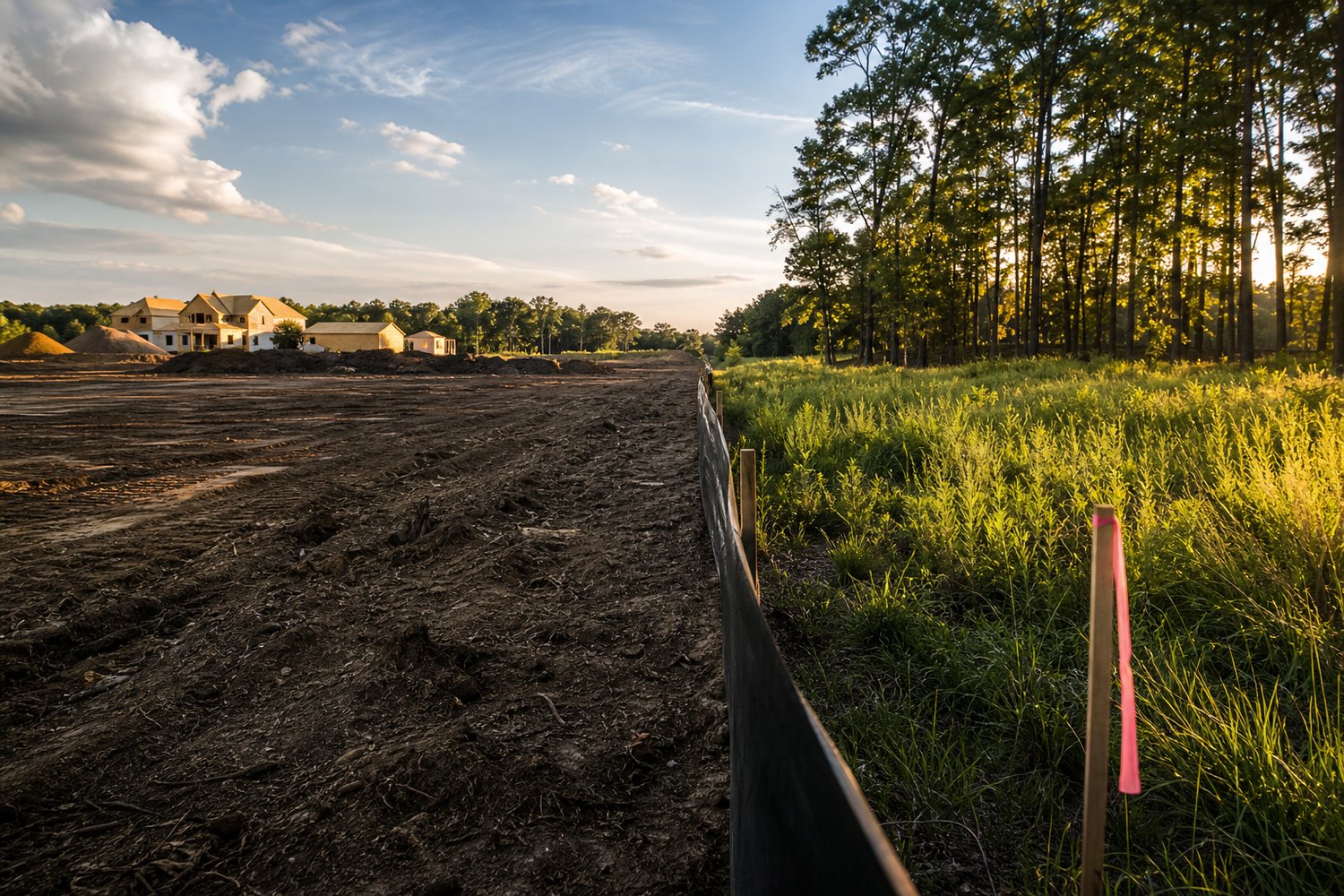
How does Cainhoy's rapid development affect home buyers?
The impact on buyers comes down to two things arriving together: a wider mix of planned housing and a longer list of unknowns. A federal appeals court affirmed the Army Corps of Engineers permit for development on Cainhoy Plantation in October 2026, and City of Charleston records show single-family, multifamily, affordable, collegiate, and conservation projects moving through review. Review isn't construction, though, so what you buy, and when, depends on the specific parcel and project.
Key Takeaways
- The U.S. Court of Appeals for the Fourth Circuit affirmed the Army Corps Clean Water Act §404 permit for portions of a 9,076-acre Cainhoy Plantation property, reported on October 23, 2026.
- A 1996 development agreement allows up to 18,000 homes in Cainhoy, but that is a capacity ceiling, not a count of homes built or a forecast.
- City of Charleston review records in 2026 include a 93.2-acre single-family project, a 38-lot conservation subdivision, a 50-unit multifamily project, an 88-unit affordable-housing proposal, and a 250-unit collegiate-housing project.
- Recent local market data for Mount Pleasant, the nearest benchmark, shows all home types sold July–September 2026 at a median of $919,562, with 34% going under contract within two weeks of listing.
- Flood exposure varies by parcel on a low-lying peninsula, so check the exact FEMA flood zone, elevation, drainage, and insurance requirements before you write an offer.
What is the impact on buyers of the Cainhoy Plantation permit ruling?
The ruling removes one major legal obstacle, which makes large-scale buildout more likely to move forward. The U.S. Department of Justice reported that the Fourth Circuit affirmed the Army Corps permit covering portions of the 9,076-acre property. The permitted plan includes residential and mixed-use development, schools, medical facilities, community services, and permanent conservation of thousands of acres.
The scale is worth understanding. Local reporting in October 2026 noted that the development agreement approved in 1996 allows up to 18,000 homes. That's a provision for long-term capacity. It doesn't tell you how many homes will exist in five years, or which neighborhood opens next.
What does that mean for your timeline?
One permit ruling doesn't deliver a finished community. Individual neighborhoods and facilities can still have separate approvals, construction schedules, and infrastructure requirements. If you're considering a purchase in a planned community, treat any amenity, school, or road improvement as planned until a builder or official record confirms it's built.
This is the kind of question I walk my clients through before they commit to a lot or a floor plan. If you're comparing Cainhoy with other growth areas, my breakdown of new developments and master-planned communities shaping the market is a good companion read.
What types of homes are in the Cainhoy pipeline?
City of Charleston records show a broader mix than a single-family-only picture suggests: conventional single-family homes, multifamily units, an affordable-housing proposal, collegiate housing, and a conservation-style subdivision. The table below summarizes what the City's review materials list. Every row is a proposal or a project in review, not a finished product.
| Project | Location | Size | Type | Stage in City records |
|---|---|---|---|---|
| Cainhoy Del Webb | 2501 Bay Strip Drive | 93.2 acres | Single-family | Preliminary plat and road construction review, January 2026 |
| Thomas Island Subdivision | Cainhoy | About 14.41 acres | 38-lot conservation subdivision | Concept plan to the Planning Commission, January 2026 |
| Multifamily proposal | 810 Travis Lane | 12.24 acres | 50 units | Technical review, February 2026 |
| Affordable-housing proposal | See City agenda | 88 units | Affordable housing | Listed in technical-review materials, February 2026; final status not established |
| Collegiate housing | 1730 Clements Ferry Road | 20.92 acres | 250 units | Technical review, April 2026; zoned PUD, Cainhoy Land and Timber |
Which of these could affect you as a buyer?
Most buyers I talk to care about the single-family and conservation-subdivision projects, since those are the closest to traditional home ownership. But the multifamily and collegiate proposals also carry an impact on buyers, because they affect road demand, nearby services, and the overall feel of the Clements Ferry Road corridor.
If you're leaning toward new construction, builder timelines and upgrade packages matter as much as the lot. Choose finishes the surrounding homes will support. Over-building a house for its neighborhood is a mistake I'd rather you avoid on day one.
How are prices and competition likely to play out?
I don't have a verified Cainhoy-specific median to quote you, so use a nearby market as a benchmark and then get numbers for the exact community you're considering. Recent local market data for Mount Pleasant shows all home types sold July–September 2026 at a median sale price of $919,562, up 2.2% from $900,000 in the same window a year earlier. That works out to a median of $403 per square foot.
The pace is the more useful signal. In that same window, 506 homes sold in Mount Pleasant (versus 475 a year earlier), and homes sold at an average of 97.5% of list price. About 34% went under contract within two weeks of listing, and 33% of listings had a price cut averaging 3.4%. Months of supply stood at 3.3, down from 3.7 a year earlier. That's a market where well-priced homes move quickly, but buyers still have room to negotiate on homes that sit. If you want the longer view of that area, I covered it in my Mount Pleasant market update.
Will new supply make Cainhoy more affordable?
More housing in the pipeline can ease pressure, but I wouldn't count on it as a guarantee. Supply arrives in phases, and infrastructure, amenities, and demand tend to rise alongside it. The impact on buyers in pricing depends on which product you're buying, from which builder, and when. Charleston County's 2026–2030 Consolidated Plan lists affordable-housing construction and water-infrastructure connections as priorities countywide, though it doesn't say every listed program applies to Cainhoy.
What should buyers check before making an offer in Cainhoy?
Check the exact parcel's flood zone, elevation, drainage, and insurance requirements first, then confirm road access and what is actually built versus planned. The Southern Environmental Law Center describes the Cainhoy Peninsula as low-lying and flood-prone. That's an advocacy source, not an official flood determination, so use it as a prompt to dig in, not as a verdict on any one lot.
Your pre-offer checklist
- Flood zone and elevation: confirm the parcel's status on current official FEMA maps and ask about elevation and stormwater design. Cainhoy doesn't have one uniform risk level.
- Insurance: get flood and homeowners quotes for the specific address before you're under contract. Costs depend on several factors, and I'll help you line up the right questions.
- Wetlands and drainage: ask what's protected, what's been mitigated, and how water moves across the lot.
- Road and access plans: City records reference access-easement improvements for the Travis Lane proposal and road-construction plans for the Del Webb project. Neither guarantees completion dates or traffic performance on Clements Ferry Road.
- Amenities and services: schools, medical facilities, and shopping appear in the permitted plan, but confirm what's funded, scheduled, and open.
- Builder and HOA terms: read the community documents and ask about phasing, so you know what the neighborhood looks like during years of construction.
Your closing will be handled by a real estate attorney, and it's worth involving yours early on new-construction contracts. For waterfront and low-lying parcels, my guide on how waterfront properties influence home values explains why location details move value.
Every situation is different, and the only way to know what a specific lot or floor plan means for you is to look at it with someone who knows this market. That's where a one-on-one conversation pays for itself.
Want to see what other buyers say about working with me? Read my reviews on Google, Zillow, and Realtor.com.
FAQ
What new neighborhoods are being built in Cainhoy?
City of Charleston review records show a 93.2-acre single-family project (Cainhoy Del Webb), a 38-lot conservation subdivision (Thomas Island), and several multifamily, affordable, and collegiate-housing proposals. These are in review or concept stages, not move-in-ready communities. Confirm each project's status with the builder and the City before you plan around it.
How will Cainhoy development affect traffic and commute times?
Expect more activity along Clements Ferry Road as projects advance, since several proposals sit on or near that corridor. City records mention road construction and access-easement improvements for specific projects, but no completion dates or traffic forecasts are established. Test your actual commute at the times you'd travel before you buy.
What types of homes are available in Cainhoy?
The pipeline includes single-family homes, a conservation subdivision, multifamily units, an affordable-housing proposal, and collegiate housing. What's available to purchase today depends on which projects have moved from review to construction. I can help you sort what's actually on the market from what's only planned.
Are Cainhoy homes at risk of flooding?
Flood exposure varies by parcel, and the peninsula is described as low-lying and flood-prone. Before making an offer, check the exact FEMA flood zone, elevation, drainage, and insurance requirements for that address. Don't assume one answer applies to the whole area.
Will new development increase future home prices in Cainhoy?
Nobody can promise that, and I won't. More supply can moderate pricing, while new roads, amenities, and services can add demand. The outcome depends on the product, the builder, and timing, which is why a parcel-level review matters more than a headline.
Ready to look at Cainhoy with a local expert?
Cainhoy's growth gives you more options than the area had a few years ago, and it asks you to do more homework. The impact on buyers is real, but it plays out parcel by parcel, builder by builder. I'll help you separate what's built from what's proposed, and what's priced fairly from what's priced on promises.
Contact me to schedule an appointment and we'll walk through the Cainhoy options that fit your plans. You can also download our buyers guide to get started.
Equal Housing Opportunity. Kimberly Ritter is a REALTOR® with Carolina One Real Estate, licensed in South Carolina, and a member of the South Carolina Association of Realtors. This article is general information, not legal, tax, or financial advice; confirm your own numbers with your real estate attorney, tax advisor, or lender.