
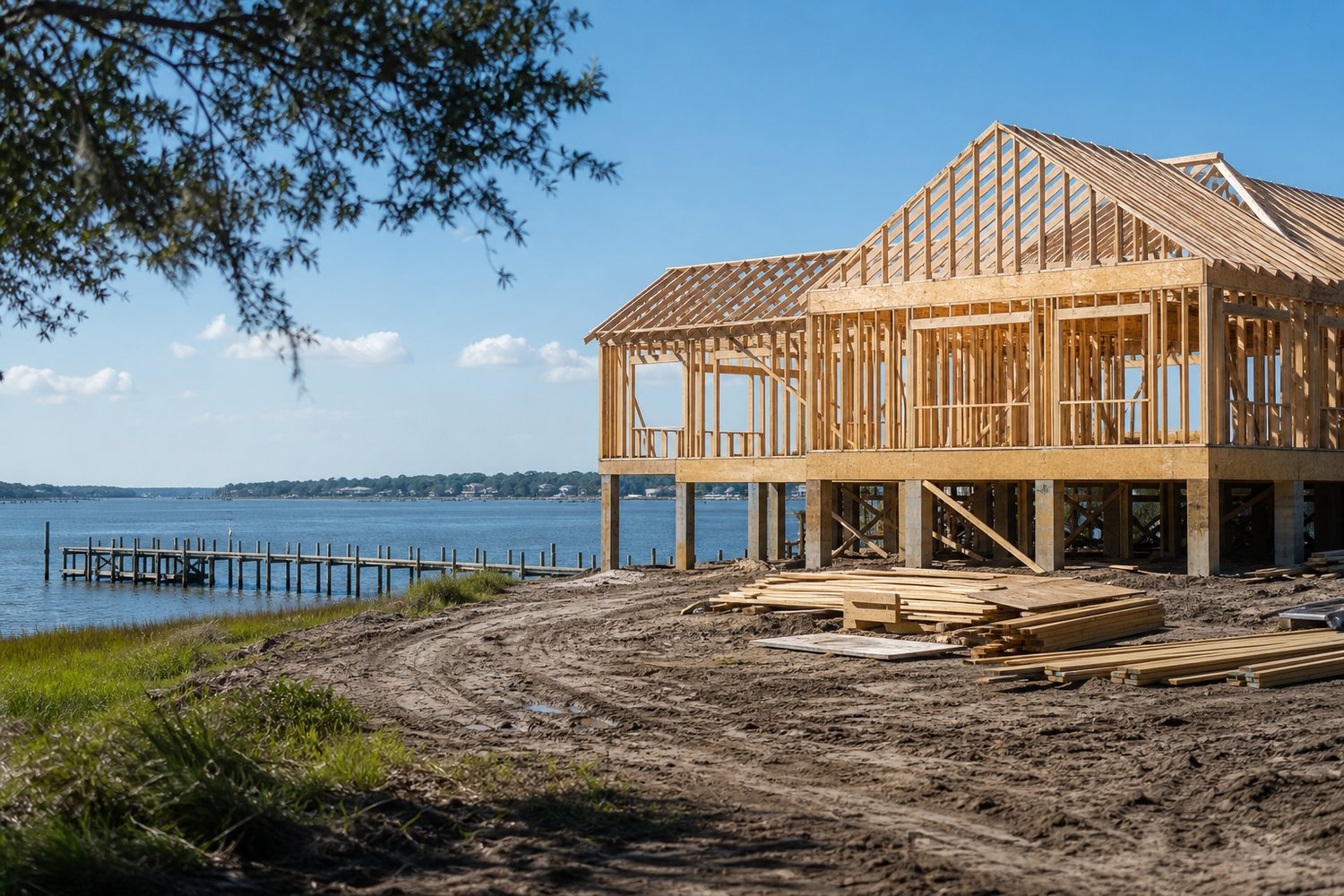
Dock Property in Mount Pleasant Buyer Checklist
What should I check before buying a dock property in Mount Pleasant?
Before buying a dock property in Mount Pleasant, verify that the dock is permitted and sits on the parcel you're buying, get a property-specific flood determination, and bring in specialists to inspect the seawall, pilings, and drainage. Then confirm the water depth works for your boat at low tide. Every waterfront home is different, so which checks matter most depends on the shoreline, the dock, and the lot.
Key Takeaways
- A permitted dock is not automatically a usable one, so ask for records on water depth at ordinary and low tides and any limits on boat length or draft.
- Charleston County says a floodplain determination can identify the flood zone, whether a property is in a Coastal A or COBRA area, historic flood levels, and mapped repetitive-loss status.
- In recent local market data, all home types sold July–September 2026 in Mount Pleasant went for an average of 97.5% of list price, and 34% went under contract within two weeks of listing.
- The seawall or bulkhead, dock pilings, crawlspace or foundation exposure, and drainage often call for specialists beyond a standard home inspection.
- A pre-approval letter sets a realistic range before you tour properties whose flood, insurance, or condition issues can affect financing.
How do you verify the dock on a dock property in Mount Pleasant?
Start with paper. The dock needs documented permits, a clear location on your parcel, and a defined right to use it, and then you confirm the water is deep enough for the boat you own or plan to buy.
Listing photos of a dock tell you almost nothing about any of that. This is the part of the process I walk my clients through before an offer goes in, and I cover more of it in my post on what to check when buying a Mount Pleasant home with a dock.
Is the dock legally permitted, and does it come with the property?
Ask the seller for copies of every permit and approval tied to the dock, and ask who issued them. Then have your real estate attorney review the title work and contract language so you know exactly what conveys. The official sources I rely on establish who has permitting authority, but they don't create a universal right to dock access. Whether the dock conveys is a property-specific question.
Does the dock sit entirely on the parcel?
Some docks cross a neighboring parcel or extend over public-trust tidelands. Others are shared, or governed by a recorded easement or maintenance agreement. Ask these questions early:
- Is the full structure within the parcel boundaries, or does any portion cross a neighbor's line?
- Is access shared, and if so, who maintains it and who pays for repairs?
- Is there a recorded easement or agreement, and does it transfer to a new owner?
Can you actually boat from it?
A dock can be permitted and still give you limited practical boating access. Ask for recent records showing usable water depth at ordinary and low tides, the condition of the channel or creek, and any limits on boat length, draft, or tide-dependent use. If you have a specific boat in mind, tell me before we tour so we can match the water to the vessel.
Can you rebuild or extend an existing dock after buying?
Don't assume you can. Whether you can repair, rebuild, or extend a dock depends on what the existing permits allow and what the permitting authority will approve. Confirm that before you price a dock project into your plans, and don't count on an extension that isn't already authorized.
How do you check flood risk and shoreline condition on a waterfront home?
Request a property-specific flood determination from the right local authority, compare it with the effective FEMA map, and then hire specialists to inspect the shoreline structures and the home itself. Proximity to open water is a poor predictor on its own.
Is the property in a flood zone, Coastal A zone, or COBRA zone?
Charleston County Emergency Management directs owners to local governments and FEMA's Flood Insurance Rate Maps for flood-zone information, and says properties in incorporated municipalities should contact that municipality for a determination. Confirm which one applies to your address.
A determination can tell you more than the zone letter. According to Charleston County Building Inspection Services, it can identify the flood zone, whether the property is in a Coastal A or COBRA area, historic flood levels, mapped repetitive-loss status, dam-failure inundation areas, and anticipated flood depths.
Then check that the information reflects the current maps. The City of Charleston's floodplain mapping page points users to the effective Flood Insurance Rate Map, the Flood Insurance Study, and any Letters of Map Change through FEMA's Map Service Center. The same page lists the Stono, Ashley, Cooper, and Wando rivers, tidal creeks, the Atlantic Ocean, and small drainage areas as flood sources. That's why site-specific elevation and drainage matter more than distance to the water.
The South Carolina Department of Natural Resources also points to the state's Flood Inundation and Mapping for Action (IMPACT) viewer, and it advises sending floodplain-development questions to the local National Flood Insurance Program administrator.
What should a waterfront inspection include beyond a normal one?
A standard home inspection is the starting point, not the finish line. Depending on the property's construction and shoreline, I'd ask about specialists for:
- The seawall or bulkhead, including visible movement, cracking, or washout behind it
- Dock pilings and framing
- Crawlspace or foundation exposure and visible settlement
- Drainage around the lot and the home
- Electrical equipment near the water and HVAC elevation
- Roof and exterior storm damage
- Erosion or marsh movement along the shoreline
Which of these you need depends on the house. Your contract should give you enough time to complete them and negotiate based on what turns up.
Do I need separate flood insurance?
Talk to an insurance agent about flood coverage for the specific home before you go under contract, and get the quote in hand. The flood zone, elevation, and construction all shape what coverage looks like, and that can change whether the purchase still makes sense. For more on how I approach these homes across the area, see my guide to buying a waterfront home in Charleston, SC.
Why get pre-approved before touring waterfront homes in Mount Pleasant?
Pre-approval tells you what you can realistically spend before you fall for a property. On waterfront, it matters even more, because flood, insurance, elevation, and repair issues can all touch your financing.
I ask buyers to talk to their lender before we tour, not after. Your loan officer is the one to confirm property-specific underwriting requirements, since no single lender rule applies to every waterfront home.
What does the Mount Pleasant market look like right now?
In recent local market data, all home types sold July–September 2026 in Mount Pleasant had a median sale price of $919,562, up 2.2% from $900,000 in the same window a year earlier. That's an area-level number, and a waterfront home with a dock will vary widely based on condition, location, and shoreline.
| Area | Median Sale Price | Homes Sold |
|---|---|---|
| Mount Pleasant | $919,562 | 506 |
| Isle of Palms | $1,619,229 | 48 |
Pace and negotiating room matter too. Among all home types sold July–September 2026 in Mount Pleasant, homes sold for an average of 97.5% of list price, 9% sold above list, and 71% sold below. About 34% went under contract within two weeks of listing, and 33% of listings had a price cut, averaging 3.4%. Months of supply was 3.3. Among homes for sale now (all home types), there are 591 active listings, with 181 new in the last 30 days.
The takeaway: well-priced homes can move quickly, and you'll want to be ready to make a clean offer. Your specific number depends on the home, the shoreline, and your financing, and that's where a conversation with me comes in. You can also compare how the same questions play out across the area in my post on waterfront homes with docks in Charleston.
Curious how my past clients felt about the process? Read my reviews on Google, Zillow, and Realtor.com.
FAQ
How do I verify a dock permit in Mount Pleasant or Charleston County?
Ask the seller for copies of all permits and approvals tied to the dock, then confirm them with the permitting authority and have your real estate attorney review the title and contract. Permits alone don't answer whether the dock sits on the parcel or whether access is shared. I can help you build that request list before you make an offer.
Do I need a separate flood-insurance policy for a Mount Pleasant waterfront home?
Ask an insurance agent how flood coverage works for the specific home and get a quote before you go under contract. The flood zone, elevation, and construction all affect coverage. Your lender can also tell you whether the property triggers any requirements.
What should a waterfront-home inspection include beyond a normal home inspection?
It should add specialists for the seawall or bulkhead, dock pilings and framing, crawlspace or foundation exposure, drainage, and electrical or HVAC equipment near the water. Which ones you need depends on the property's construction and shoreline features.
Should I get mortgage pre-approval before touring waterfront homes in Mount Pleasant?
Yes, because it sets a realistic range before you invest time in homes whose flood, insurance, dock, or condition issues could affect financing. Your loan officer should confirm property-specific underwriting requirements, since there's no universal rule for every waterfront home.
The core of buying a dock property in Mount Pleasant is verifying the dock, the flood picture, and the shoreline before you commit, with your financing lined up first. If you're ready to look at specific homes or want a checklist tailored to your boat and budget, contact me to schedule an appointment. You can also download our buyers guide.
Equal Housing Opportunity. Kimberly Ritter is a REALTOR® with Carolina One Real Estate, licensed in South Carolina, and a member of the South Carolina Association of Realtors. This article is general information, not legal, tax, or financial advice. Confirm your own numbers with your real estate attorney, tax advisor, or lender.