
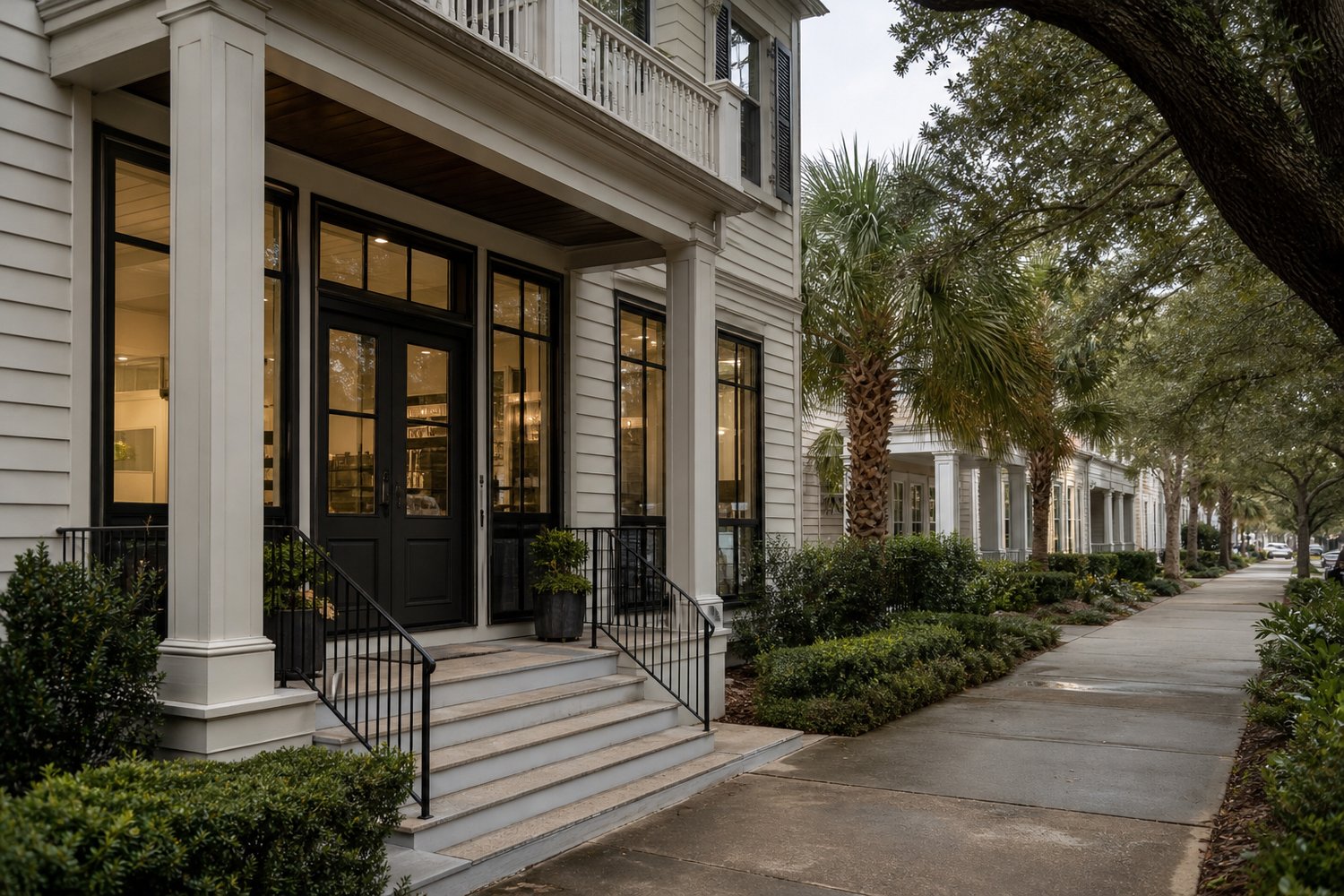
What should you verify in Northern Mount Pleasant and Cainhoy before buying new construction?
To verify in Northern Mount Pleasant and Cainhoy, start with the lot, not the house: get the survey, grading and drainage plans, and the applicable flood map result for that exact lot and its access roads. Then confirm the contract terms, every incentive, the HOA fees, the inspection rights, the written warranty, and how many more homes the builder or competing builders can still add nearby. Fresh finishes and a promotional price don't answer any of those questions.
Key Takeaways
- Homes sold in Mount Pleasant over the trailing 90 days to November 2026 had a median sale price of $832,500, so a builder's incentive should be judged against the real contract price and that backdrop.
- A "not in a flood zone" line from a sales office doesn't replace the actual FEMA map, the lot survey, and the drainage plan for your specific lot and the road that serves it.
- Every incentive should be in writing, including whether it requires the builder's preferred lender or attorney and whether it applies to the base price or only to upgrades.
- A decorated model can include upgrades that aren't in the base specification, so compare homes with an itemized list of what's actually included.
- Ask for total planned homes, remaining lots, and future phases, because the homes still to be built are your future resale competition.
New construction around northern Mount Pleasant and the Cainhoy area moves fast, and the sales centers are well staffed and polished. That's exactly why I walk buyers through a checklist before they pick a lot. Here's the order I'd use to verify in Northern Mount Pleasant and Cainhoy communities, from the ground up.
If you're still deciding between a builder's home and an existing one, my comparison of new construction vs. resale in Mount Pleasant covers that decision. This post assumes you've already decided to look at new builds.
How do you check lot drainage and flood risk on a new-construction lot?
Compare the exact lot, and the road that reaches it, against the FEMA flood map, Charleston County's geographic information (GIS) layers, and the subdivision's drainage plans. A community's marketing description doesn't establish that a particular lot is free from flooding or ponding.
What documents should you request?
Before you sign, ask the builder for:
- The lot-specific survey and grading plan
- The drainage plan and any stormwater-system information
- Recorded easements, including drainage easements that cross or border the lot
- Retention or detention pond documentation, including who maintains it
- Any available history of standing water or drainage complaints
Then compare the proposed finished-floor elevation with the lot's elevations. If you can, walk the property after a substantial rain. Water tells you things a plan can't.
Why check the access roads too?
Your building pad isn't the only thing that matters. Check the lot and the roads you'd use every day against the flood map and local GIS layers. Ask whether flood insurance, additional grading, retaining structures, or drainage maintenance could affect your ownership costs or future resale. Your insurance agent and lender can tell you what applies to your situation, and I can point you to the right records for the lot you're considering.
Cainhoy and the northern edge of Mount Pleasant are changing quickly, so lot-by-lot conditions can differ even within one community. I covered the broader picture in how Cainhoy's rapid development affects buyers. If you're eyeing a waterfront or dock lot, my dock-buying checklist adds more to confirm.
What should the builder contract, incentives, and fees spell out?
The contract should name the plans and specifications, the allowances, the change-order rules, the completion and closing provisions, and what happens to your earnest money if something goes wrong. Have a South Carolina real estate attorney review the builder's purchase agreement before any review window in your contract expires.
What contract provisions deserve the closest read?
- Plans and specifications incorporated into the contract, not just referenced in a brochure
- Allowances and change orders: what's covered, what happens when you exceed an allowance, and how changes are priced
- Completion and delay rights: what the builder can do if the home isn't ready, and what you can do
- Cancellation rights and financing contingencies
- Earnest-money treatment if the schedule slips or you cancel
- The punch-list process: how items are documented and when they're fixed
Builder contracts are written for the builder. That doesn't make them unfair, but it does mean you want someone on your side reading every page.
How do you compare incentives without losing sight of the real price?
Get every incentive in writing and ask five questions:
- Is it tied to the builder's preferred lender or attorney?
- Does it apply to the base price or only to upgrades?
- Can it be combined with other promotions?
- What happens if you change lenders or miss a closing deadline?
- Can the builder change it before you sign?
An incentive that requires a lender you wouldn't otherwise choose can cost more than it saves. Compare two offers by the final contract price and your total cost of financing, not by the headline.
What about finishes and the model home?
A decorated model often includes upgrades that aren't part of the base specification. Build an itemized worksheet for each home you compare: flooring, cabinets, counters, appliances, lighting, plumbing fixtures, trim, landscaping, fencing, window treatments, garage features, and exterior materials. If it isn't on the list, assume it isn't included until the builder says otherwise in writing.
Which community fees should you ask about?
Request the declaration, bylaws, rules, current budget, and fee schedule. Then ask about:
- Transfer or initiation charges and capital contributions
- Amenity obligations, and whether unfinished common areas could affect assessments or access
- Any planned fee changes
- Which costs you pay and which the builder pays during development
I won't put a number on those fees here because they vary by community and change over time. Get the current figures from the builder and the association, and I'm happy to help you compare them side by side.
How do inspections and warranties protect you on a brand-new home?
An independent inspector works for you, not the builder, and a written warranty tells you what the builder will fix and how to ask. Confirm both before you close, not after the first problem shows up.
When can a new home be inspected?
A new home can be inspected at several stages: before drywall, near substantial completion, and before closing. Ask the builder up front whether independent inspections are allowed, whether findings must be submitted by a deadline, and how unresolved items are handled at the final walk-through. A pre-drywall look matters because it's the one chance to see framing, wiring, and plumbing before they're covered.
What should you know about the builder warranty?
Get the written warranty before closing, not at closing. Identify:
- The coverage period and what's excluded
- The claim procedure and response deadlines
- The emergency-contact process
- Any dispute-resolution terms
Then keep one file with the inspection reports, photos, repair receipts, manuals, and all warranty correspondence. If a claim ever gets contested, that file is your best evidence.
How do you size up future resale competition and local infrastructure?
Ask the builder or community association for the total planned homes, the current phase, the remaining lots, expected future phases, product types, and whether competing builders can enter later phases. The homes still to be built are the ones you'll compete with when you sell.
What does the market look like around you?
Recent local market data shows 591 homes for sale now in Mount Pleasant, 181 new listings in the last 30 days, and 411 homes sold over the trailing 90 days to November 2026. Those are Mount Pleasant-wide figures, not northern Mount Pleasant or Cainhoy specifically, and they don't set a price for any new home. They're a reminder that buyers have options, and a builder's promotion is one option among many.
| Area | Median Sale Price |
|---|---|
| Mount Pleasant | $832,500 |
| Daniel Island | $1,767,500 |
| Sullivans Island | $5,787,500 |
| Downtown Charleston | $1,165,000 |
| West Ashley | $480,804 |
| Isle of Palms | $1,775,000 |
These are area-level medians. An individual home's value depends on condition, street, build year, and timing, and a new build's price can sit well above or below them.
How do you judge your lot's position in the community?
Compare the likely future resale home with the lot's position, view, road exposure, amenity access, and expected buildout. A lot backing to a future phase isn't the same as one backing to a preserved buffer. Ask what's planned next to it and get the answer in writing where you can.
What should you test beyond the community gates?
For each candidate community, drive the actual routes to work, shopping, medical services, and major roads at peak times. Then ask about planned road extensions, intersection improvements, utility work, and adjacent land uses through the municipal and county planning records, rather than relying only on the sales office's description. This is the part of how you verify in Northern Mount Pleasant that most buyers skip, and it's where daily life and resale value are often decided.
Every community and lot is different, and the only way to know what applies to yours is to gather the documents and compare them side by side. That's the work I do with buyers before they commit. For the wider strategy, my tips for buying in Mount Pleasant's competitive market are a useful companion.
Want to see what other buyers say about working with me? Read my reviews on Google, Zillow, and Realtor.com.
FAQ
What should I check about drainage before buying a new-construction lot in Cainhoy?
Check the lot-specific survey, grading plan, drainage plan, easements, and stormwater or pond documentation, then compare the finished-floor elevation with the lot's elevations. Look at the access roads as well as the building pad, and visit after a heavy rain if you can. A marketing statement about the community doesn't replace the records for your lot.
How can I compare builder incentives in Northern Mount Pleasant without overlooking the real contract price?
Put each offer in writing and compare the final contract price, not the headline incentive. Confirm whether it's tied to a preferred lender or attorney, whether it applies to the base price or upgrades, and whether it can change before you sign. Then compare your total financing cost under each scenario.
Should I hire an independent inspector for a brand-new home in South Carolina?
Yes, I recommend it. An independent inspector works for you, not the builder, and can review the home before drywall, near completion, and before closing. Ask the builder early whether outside inspections are allowed and what deadlines apply to submitting findings.
What should a new-construction contract say about completion dates, delays, and earnest money?
It should state the completion and closing provisions, each party's rights if the schedule slips, your cancellation rights, and exactly how your earnest money is treated in each case. Have a South Carolina real estate attorney review it before any window to act in your contract runs out.
Is a finished model home representative of the finishes included in the base price?
Not necessarily. A decorated model often includes upgrades that aren't part of the base specification. Use an itemized worksheet and get the included finishes in the contract's plans and specifications, not just in the sales brochure.
The core takeaway: new finishes and incentives are the easy part of a builder's pitch, and the lot, the contract, the fees, and the future buildout are the parts that decide how the purchase looks years from now. If you want help comparing communities and gathering the right records, contact me to schedule an appointment. You can also download our buyers guide to start your own checklist.
Equal Housing Opportunity. Kimberly Ritter is a REALTOR® with Carolina One Real Estate, licensed in South Carolina, and a member of the South Carolina Association of Realtors. This article is general information, not legal, tax, or financial advice; confirm your own numbers and contract terms with your real estate attorney, tax advisor, or lender.